

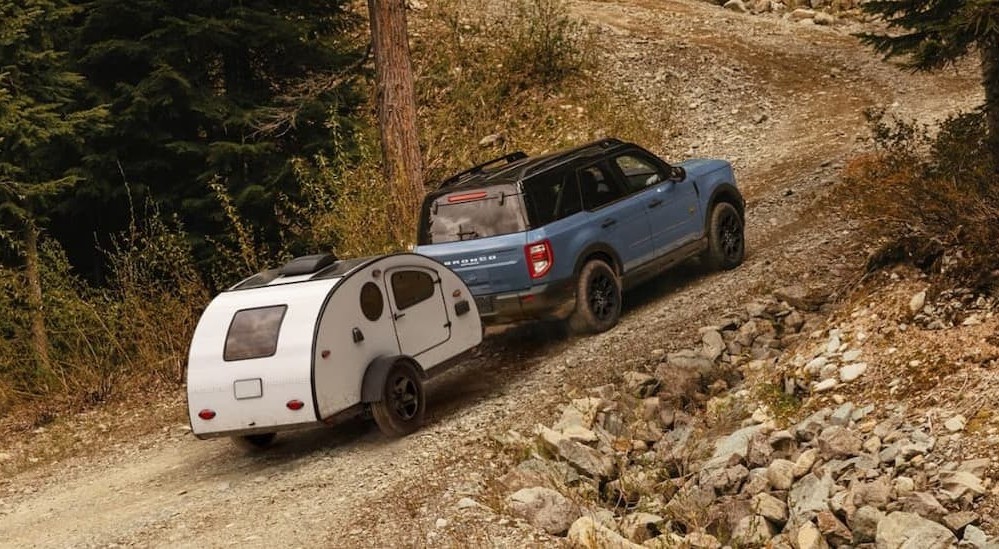
If you’ve been looking at smaller SUVs lately, you’ve probably noticed how quickly they start to blend. On paper, a lot of them hit the same marks—subcompact size, all-wheel drive, decent fuel economy—but once you dig a little deeper, the differences become a lot more meaningful.
That’s especially true when comparing the Ford Bronco Sport and the Subaru Crosstrek. These two are constantly cross-shopped, particularly by drivers who want something practical for everyday use but still capable enough for trips, weather, and everything in between. And if you’re searching for a Ford Bronco Sport for sale near Arlington Heights, there’s a good chance the Crosstrek has come up along the way.
The key thing to note is that while they seem similar, they’re built with different priorities. And once you look at how they actually perform in real-world situations, the Bronco Sport starts to separate itself in a few important ways. With that in mind, let’s look at how these two SUVs compare and help you ultimately decide which one is worth your hard-earned cash. Are you good to go? Then let’s get started.
Why This Comparison Isn’t as Even as It Looks
At first glance, both of these SUVs check similar boxes. They’re subcompact, are standard all-wheel drive, and they’re designed for drivers who want a mix of everyday usability and light adventure capability.
But the way they go about it is different.
The Crosstrek leans into the off-road aesthetic with added ground clearance and rugged styling for light off-road capability. It’s efficient, simple, and easy to drive. The Bronco Sport, on the other hand, is built to feel like a true SUV—even in a smaller frame.
Where the Differences Actually Matter
That difference might sound subtle, but it becomes clear quickly when you look at factors like cargo space, capability, and overall flexibility. This isn’t really a case of two identical competing—it’s more about choosing between two different approaches, and one of them simply gives you more room to grow into.
Daily Driving Around Arlington Heights: More Than Just Comfort
If your driving is mostly commuting, errands, and local trips, both SUVs will get the job done. The Crosstrek does have an edge in fuel economy, reaching a best of 36 MPG across the board versus the Bronco Sport’s 25 MPG in the city, 30 MPG on the highway, and 27 MPG combined.
But daily driving isn’t just about MPG, is it?
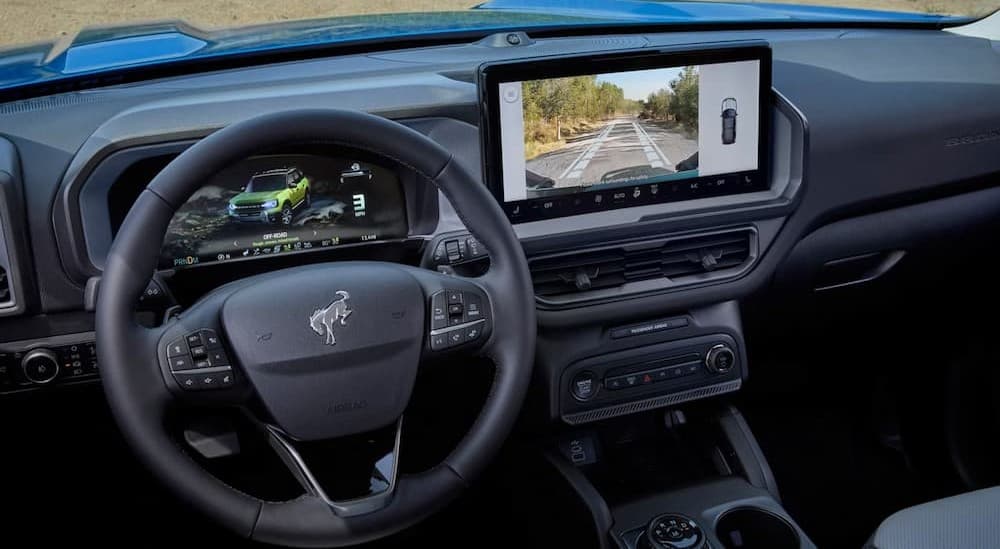
The Bronco Sport offers a higher driving position and a more solid, planted feel on the road. It gives you better visibility and a stronger sense of control, especially in traffic or when conditions change. It simply feels more like what most people expect from an SUV.
The Crosstrek, by comparison, feels lighter and more car-like. Of course, that’s not necessarily a downside—but it does mean it lacks the same sense of presence.
A More Natural Everyday Fit
For many drivers, especially those upgrading from something larger, the Bronco Sport feels natural day to day. Not to mention, the Bronco Sport greatly outperforms the Crosstrek in several ways, but we’ll focus more on this once we discuss performance and capability.
Space and Cargo: Where the Gap Starts to Show
One of the biggest differences between the 2026 Bronco Sport and 2026 Crosstrek—and one that matters more over time as your primary family vehicle—is space.
Boxy Design, Bigger Usable Space
The Bronco Sport’s shape is more upright and boxy—its DNA with the traditional Bronco off-road SUV is clear as day, which translates directly into more usable storage space. Behind the rear seats, it offers significantly more room than the Crosstrek and maintains that advantage with the seats folded down. But what do these measurements look like?
Cargo Capacity Across Bronco Sport Trims
Your 2026 Bronco Sport’s maximum cargo space will depend on whether you purchase the Badlands trim or not. With the Badlands, you’re looking at 29.4 cu.ft. of cargo space with the second row seats upright, increasing to 60.6 cu.ft. when folded.
The other three trims—the Big Bend, Heritage, and Outerbanks—have even more room, with 32.5 cu.ft. of space at all times, which more than doubles to 65.2 cu.ft. when you fold the rear row.
However, even the Badlands has better cargo space than even the most spacious 2026 Crosstrek trim—the Wilderness—which only has a paltry 20 cu.ft. of space when the back row is in use, and increases to only 54.9 cu.ft. when you remove it from the equation.
Everyday Usability and Real-World Difference
- Bronco Sport:
- More cargo space behind the second row
- Easier loading thanks to a taller rear opening
- Better suited for gear, luggage, and bulkier items
- CrossTrek
- Still practical, but more limited in overall space
- Better for lighter use cases, which won’t cut it for even moderately adventurous families
This is one of those things that might not seem like a big deal at first—but believe us, over time, having that extra space without needing to think about it, and plan makes a monumental difference in your quality of life.
Capability: Not Quite Apples-to-Apples
The first thing we should get out of the way is that both the 2026 Bronco Sport and Crosstrek come standard with all-wheel drive, so they’re equally capable in basic weather conditions like snow and rain. But once you go beyond that, the Bronco Sport starts to pull ahead clearly.
Built-In Off-Road Systems and Hardware
The 2026 Bronco Sport is built with capability in mind from the start. Not only are you treated to a host of amenities like Ford’s GOAT modes (Goes Over Any Terrain), an advanced terrain management system, and a highly capable 4×4 system designed for different driving scenarios.
It also delivers more torque and comes with a traditional eight-speed automatic transmission instead of the continuously variable transmission (CVT) found in the 2026 Crosstrek.
Power, Towing, and Engine Options
Ultimately, the only advantage the 2026 Crosstrek has with its more unique boxer engines, aside from fuel efficiency, is a measly two additional horsepower in its base engine and, more noticeably, a 3,500 lbs maximum towing capacity over the Bronco Sport’s 2,200 lbs.
However, the Bronco Sport Badlands increases the towing capacity to 2,700 lbs, making it closer to the Crosstrek. As for the horsepower and torque numbers, the 1.5L EcoBoost turbocharged I-3 engine that’s standard in the 2026 Bronco Sport delivers up to 180 hp and 200 lb-ft of torque against the Crosstrek’s 182 hp and 178 lb-ft of torque.
The only way to get higher horsepower from the 2026 Crosstrek is to opt for a hybrid powertrain, which even then only increases your horsepower to 194 hp at the expense of a maximum towing capacity of only 1,500 lbs.
Stronger Engine Options and Balanced Efficiency
The Ford Bronco Sport, on the other hand, has a 2.0L EcoBoost turbocharged I-4 engine that creates an impressive 250 hp and 280 lb-ft of torque, while still maintaining respectable EPA-estimated ratings of 21 MPG in the city, 28 MPG on the highway, and 24 MPG combined.
- Bronco Sport Advantages:
- More torque for low-speed driving and traction
- Provides an exceptional blend of capability, efficiency, and practicality
- Badlands trim provides a solid increase in horsepower and torque output
Ultimately, the Crosstrek is simply more limited beyond commuting, but remember, we’re not talking about off-roading. We’re instead talking about having a vehicle that feels more confident on the road when conditions aren’t ideal, whether that be rain, snow, sleet, ice, you name it. And the Bronco Sport simply does that better than the Crosstrek.
Which One Makes More Sense for Arlington Heights Drivers?
When you break it down, the decision becomes pretty straightforward.
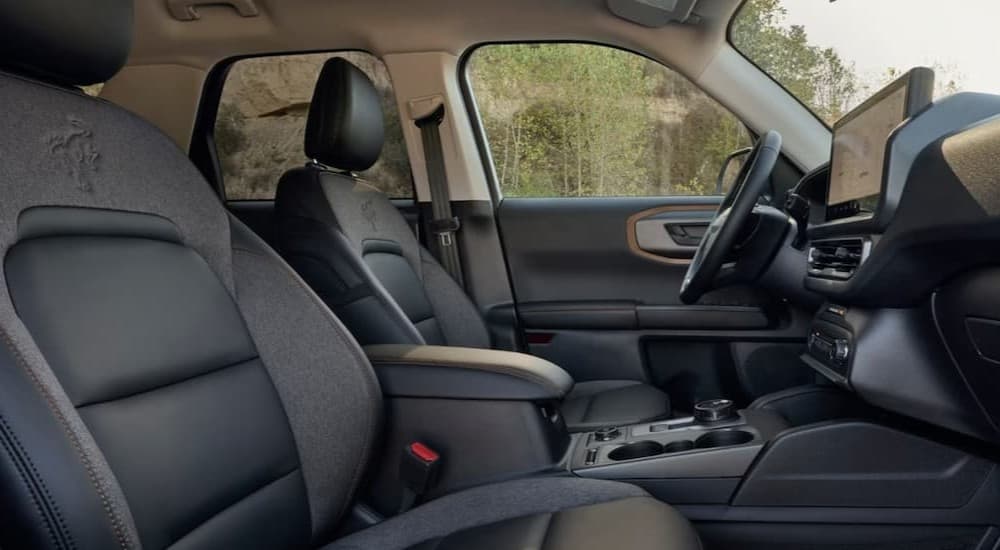
The Bronco Sport offers more usable cargo space, a more commanding SUV driving position with better visibility, and stronger overall capability for changing road and weather conditions.
A More Versatile All-Around SUV
It’s built with adventure-ready features and available off-road-focused upgrades that make it more confident when pavement ends, or conditions get unpredictable.
But it can also handle more than just daily commuting, making it a more versatile option for drivers who want confidence in a wider range of situations—whether that’s weekend trips, rougher terrain, or simply added peace of mind year-round.
For most drivers, especially those looking for something that can handle a wider range of situations, the Bronco Sport simply checks more boxes.
Where the Bronco Sport Really Stands Out
The Bronco Sport doesn’t just compete with the Crosstrek—it offers a broader range of what most drivers are actually looking for. It’s comfortable enough for daily driving, but it doesn’t feel limited when your plans change.
You’ve got the space when you need it, the capability when conditions get unpredictable, and a design that feels like it’s built with real-world use in mind, not just efficiency and chasing trends.
That balance is what makes it the stronger long-term choice and why it’s our undisputed recommendation for any driver looking for a Ford Bronco Sport near Arlington Heights.
Connect with us


- May 2026
- April 2026
- February 2026
- January 2026
- December 2025
- November 2025
- October 2025
- September 2025
- August 2025
- July 2025
- May 2025
- April 2025
- March 2025
- February 2025
- June 2024
- May 2024
- April 2024
- March 2024
- February 2024
- January 2024
- November 2023
- October 2023
- September 2023
- June 2023
- May 2023
- March 2023
- February 2023
- January 2023
- December 2022
- November 2022
- October 2022
- September 2022
- August 2022
- July 2022
- June 2022
- May 2022
- April 2022
- March 2022
Archives
- Ford Bronco for Sale
- Ford Bronco For Sale Near Palatine
- Ford Bronco Sport for Sale
- Ford Bronco Sport for Sale Near Arlington Heights
- Ford Bronco Sport for Sale Near Bloomingdale
- Ford Bronco Sport for Sale Near Elk Grove Village
- Ford Dealer Near Barrington
- Ford Dealer Near Elgin
- Ford Dealer Near South Barrington
- Ford Escape for Sale
- Ford Explorer for Sale
- Ford F-150 for Sale Near Des Plaines
- Ford Maverick for Sale Near Des Plaines
- Ford Transit for Sale
- Uncategorized