

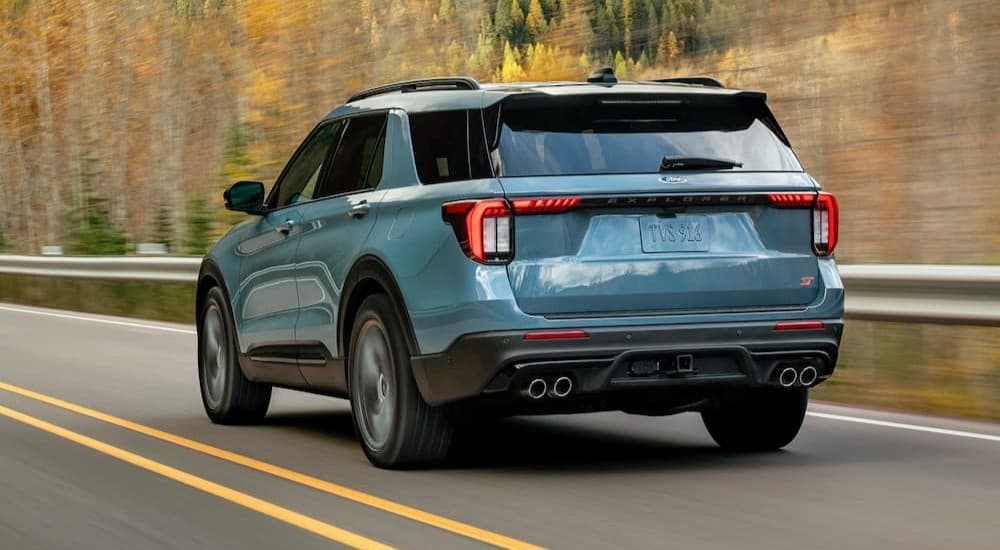
If you’re deciding between a Chevy Traverse and a Ford Explorer for sale, then you have a lot to consider. The Explorer and Traverse may both be three-row SUVs, but they approach capability, personality, and power from very different directions. Ford has engineered the 2026 Explorer to be more than just a daily SUV—it’s a vehicle with ambition, strength, technology, and a personality that refuses to feel ordinary.
The Chevrolet Traverse is a capable family hauler with a comfortable interior and reasonable amenities, no question. But when you look under the hood, around the cabin, and into the details that actually matter in daily life, the Explorer begins to stand out as the SUV that doesn’t just transport you—it elevates the entire driving experience. From performance options to technology to driver engagement, the Explorer offers more dimensions without adding complication.
This comparison isn’t about tearing either SUV down. It’s about showing how the Explorer brings a more dynamic drive and a more complete overall package to the table. For drivers who want real capability, modern connectivity, and confident engineering, the difference becomes easy to feel.
The Explorer’s Power Keeps You in Command
Performance is where the 2026 Ford Explorer begins to pull ahead. Ford offers multiple engine options that provide real variety in how the vehicle feels and drives. At its base level, the Explorer’s 2.3L EcoBoost engine generates 300 hp and 310 lb-ft of torque, delivering strength that feels energetic whether you’re on the highway or heading out of town.
If your idea of power includes a bit more punch, the Explorer offers an available 3.0L EcoBoost twin-turbocharged V6 that produces an impressive 400 hp and 415 lb-ft of torque. That level of output turns the Explorer into more than just a family SUV—it becomes a vehicle with real presence and confidence.
This isn’t just raw power for the sake of numbers. We’re talking about an SUV that launches with authority, accelerates confidently when passing, and handles weight with assurance, whether you’re travelling with passengers or towing gear. This tiered engine strategy means the Explorer can fit a range of driving needs—from everyday balance to spirited performance—without compromising control or comfort.
The 2026 Chevrolet Traverse, on the other hand, delivers a single engine experience. Its 2.5L turbocharged four-cylinder produces 328 hp and 326 lb-ft of torque. That’s perfectly respectable and enough to get the Traverse moving with comfort and stability, but it doesn’t create the same feeling of exhilaration or multi-faceted capability. The result is a vehicle that performs well as a family conveyance but lacks the breadth of personality that the Explorer brings to the road.
Additionally, the Explorer’s 10-speed automatic transmission and rear-wheel drive setup enhance both performance and fuel efficiency. Acceleration feels refined and adaptable across terrains and speeds, while maintaining a smooth, composed ride quality. The Traverse’s eight-speed automatic transmission and front-wheel drive configuration are capable, yet don’t quite match the Explorer’s refinement or response, especially when comparing more demanding situations like highway merges or uphill acceleration under load.
When you dig into real-world driving, these differences reveal themselves in how the vehicles feel—not just how they’re rated on paper. The Explorer feels agile, responsive, and ready to step up when the road calls for something more exciting. The Traverse stays comfortable and reliable, but without that extra spark of dynamic capability.
Tremor vs Z71: Off-Road Capability That Actually Feels Ready
The Explorer Tremor isn’t just about power—it’s deliberately engineered for real off-road confidence. This is an all-new trim for 2026 that comes with a lifted suspension that boosts ground clearance to 8.7 inches, which is over an inch higher than the standard Explorer ride height—a meaningful difference when navigating uneven trails, rocks, or deep ruts.
The Tremor rides on unique 18-inch wheels wrapped in knobby all-terrain tires, giving it traction where pavement ends, and includes underbody skid plates and a Torsen limited-slip rear differential to protect key components and maintain momentum on slippery surfaces. These upgrades aren’t cosmetic; they enhance off-road performance, enabling the vehicle to navigate difficult terrain more confidently and safely.
By contrast, the Chevrolet Traverse Z71 does bring serious off-road-ready hardware, but doesn’t go quite as far. It only has 7.8 inches of ground clearance, and its twin-clutch rear differential isn’t as durable as a Torsen unit. This package tends to lean more toward balanced everyday comfort and enhanced traction than the bold, trail-focused profile the Tremor delivers. The Z71’s features are excellent for loose surfaces and mild adventure scenarios, but they don’t quite push capability into the next tier.
In real-world terms, that means the Explorer Tremor feels like a vehicle designed to tackle a wider spectrum of conditions—from winding dirt roads to gravel campsites—without hesitation and without requiring owners to add aftermarket gear. The all-terrain tires and lifted suspension don’t just look purposeful on paper; they deliver measurable confidence when the trail gets rougher. In contrast, the Traverse Z71’s setup is capable of lighter off-pavement use but stops short of giving drivers that same sense of trail-ready assurance.
In short: the Tremor trim doesn’t simply add a few rugged features—it interprets the SUV as a vehicle with genuine off-road intent. The Traverse Z71 is a strong contender in the family-friendly off-road crossover space, but the Explorer Tremor takes that ambition a step further, turning everyday rides and weekend excursions into experiences that feel genuinely confident and capable, no matter what is beneath your tires.
The Explorer Embraces the Future
Step inside the 2026 Ford Explorer and one of the first things you’ll notice is how technology is integrated into the driving experience. The standard 13.2-inch touchscreen is intuitive and generous in scale, placing functionality and connectivity right where you can easily see and interact with it. Wireless Apple CarPlay and Android Auto come standard, so smartphone integration feels seamless and natural. The Explorer also offers premium audio systems, including an available B&O sound experience with 14 speakers, turning every trip into a rich, immersive environment.
By contrast, the Traverse’s technology offerings are solid but more conventional. A functional infotainment system with smartphone compatibility keeps things practical and familiar, but it lacks the Explorer’s sense of scale, engagement, and premium presence. For instance, even the top High Country trim only offers a 12-speaker sound system. The Explorer doesn’t just provide tech—it showcases it in a way that feels smart, organized, and designed for actual usability.
The difference here is not just about screens and sound. It’s about how the cabin makes you feel: connected, confident, and in command. In the Explorer, technology doesn’t feel like an afterthought—it feels like part of a thoughtful, forward-thinking design philosophy. In the Traverse, the experience remains comfortable and accessible, but it doesn’t raise eyebrows or spark excitement the way Explorer’s full digital integration does.
Everyday Usability: Comfortable and Capable (But With a Twist)
Both the Explorer and Traverse are three-row SUVs built for modern life. They offer generous seating capacity, flexible cargo space, and the kinds of real-world usability families and active drivers appreciate. The Traverse does a great job here—it seats up to eight passengers and provides thoughtful interior comfort features that support school-day runs, weekend adventures, and long-distance trips.
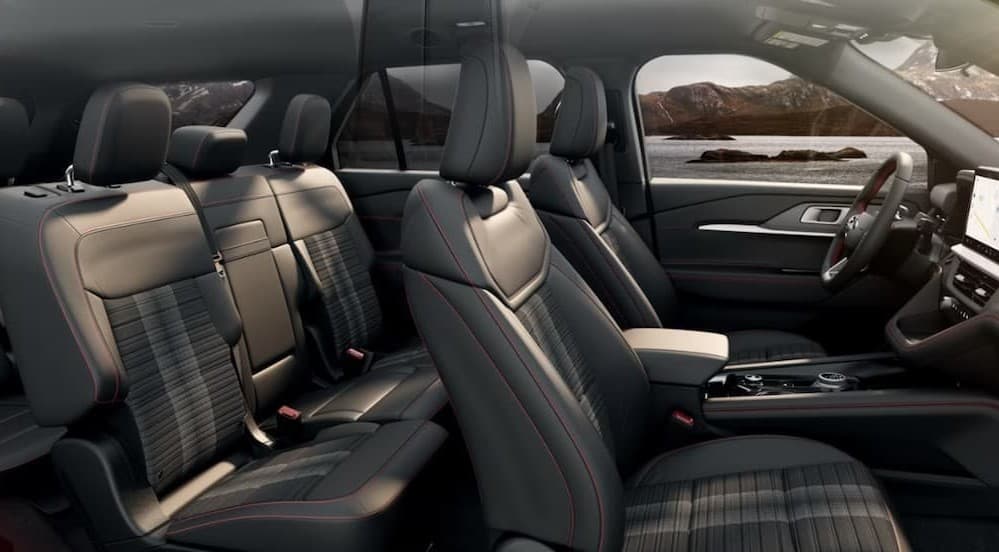
Yet the Explorer builds on that baseline and adds layers that make the everyday experience feel elevated. Inside, drivers can select seats that match their lifestyle, from durable, easy-to-clean cloth to available leather-trimmed seating with multicontour cushions and massage capability to make long drives noticeably less tiring.
The driving position in the Explorer feels purposeful and commanding, with sight lines that help you feel aware and in control rather than simply along for the ride. Its cabin materials lean upscale, with soft-touch surfaces, available contrast stitching, and thoughtful ergonomic placement that keeps controls where your hands naturally land. Those comfort-forward details give the Explorer a sense of calm and capability that doesn’t fade once the novelty wears off.
The Traverse brings comfort and space. The Explorer adds presence and premium-tier features that elevate the everyday drive. It raises expectations for what a three-row SUV should be, both in form and function.

Explorer Is More Than an SUV: It’s an Experience
When you compare the 2026 Ford Explorer and 2026 Chevrolet Traverse side by side, the Explorer emerges as a more dynamic choice. It offers a range of powertrain options that cater to different driving personalities, advanced technology that treats connectivity as a priority, and a cabin presence that feels intentional and modern rather than merely utilitarian.
The Traverse holds its own as a comfortable and practical SUV with solid performance and a thoughtful interior, but it doesn’t quite elevate the driving experience in the way the Explorer does. Whether it’s the Explorer’s powerful engine choices, expansive technology, or bold design, every part of this SUV feels crafted with more dimension and expression.
Choosing a 2026 Ford Explorer means choosing an SUV that doesn’t simply check boxes—it delivers the kind of confident performance, engaging personality, and well-rounded capability that makes driving more than a task. It becomes something you look forward to. That’s the Explorer difference.
Connect with us


- February 2026
- January 2026
- December 2025
- November 2025
- October 2025
- September 2025
- August 2025
- July 2025
- May 2025
- April 2025
- March 2025
- February 2025
- June 2024
- May 2024
- April 2024
- March 2024
- February 2024
- January 2024
- November 2023
- October 2023
- September 2023
- June 2023
- May 2023
- March 2023
- February 2023
- January 2023
- December 2022
- November 2022
- October 2022
- September 2022
- August 2022
- July 2022
- June 2022
- May 2022
- April 2022
- March 2022
Archives
- Ford Bronco for Sale
- Ford Bronco Sport for Sale
- Ford Bronco Sport for Sale Near Bloomingdale
- Ford Bronco Sport for Sale Near Elk Grove Village
- Ford Dealer Near Barrington
- Ford Dealer Near Elgin
- Ford Dealer Near South Barrington
- Ford Escape for Sale
- Ford Explorer for Sale
- Ford F-150 for Sale Near Des Plaines
- Ford Maverick for Sale Near Des Plaines
- Ford Transit for Sale
- Uncategorized